Lower Blepharoplasty

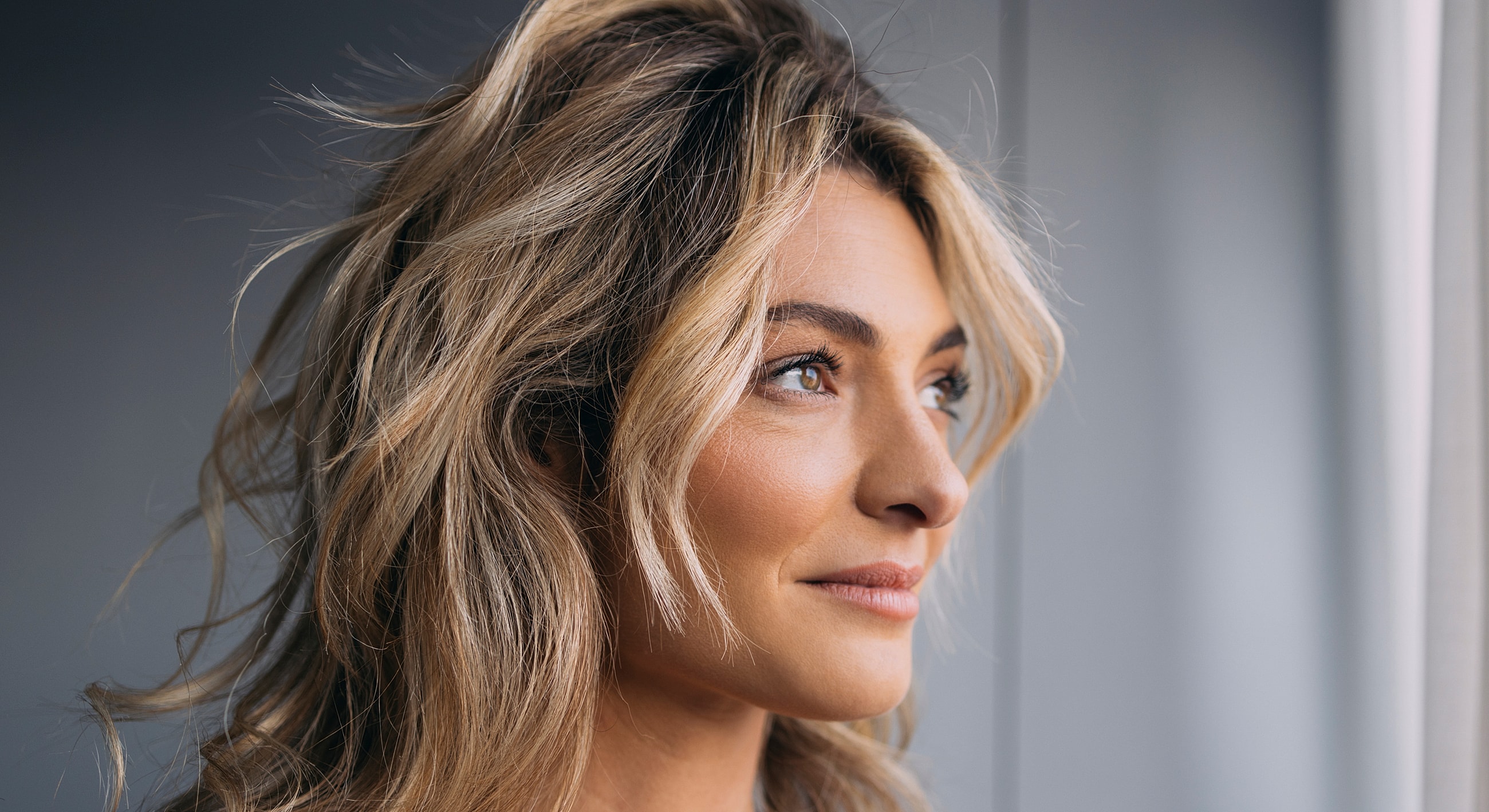
Persistent undereye bags, deep tear trough hollows, and dark shadows can make you look tired, stressed, or older than you feel. As part of the natural aging process, the orbital septum weakens, allowing protective fat pads around the eye to protrude forward. At the same time, reduced skin elasticity creates fine wrinkles and slackness along the lower eyelid margin.
At Schlessinger Eye and Face in Woodbury, NY, lower blepharoplasty is performed under the direct care of board-certified oculoplastic surgeon Dr. David A. Schlessinger. With over 30 years of subspecialty experience, Dr. Schlessinger expertly repositions or removes excess fat and tightens lower lid tissues to create a smooth, seamless transition from the lower eye to the upper cheek.

Outpatient surgical procedure to smooth undereye bags, reposition herniated fat, and refine loose lower eyelid skin.
Precise, in-office or outpatient procedure taking approximately 60 to 90 minutes.
Erases persistent undereye bags, fills deep tear trough hollows, smooths crepey skin, and removes dark lower lid shadows.
Expect 7 to 10 days of mild swelling and bruising; final results reveal smooth, rested lower eyelid contours that blend seamlessly into the midface.
Lower Eye Rejuvenation
Lower blepharoplasty is a subspecialty surgical procedure designed to correct undereye puffiness, bulging fat pads, and loose skin along the lower eyelid. Unlike general cosmetic approaches that simply trim fat, Dr. Schlessinger utilizes advanced fat-preservation and repositioning techniques to avoid a hollow, sunken appearance.
Eliminate Undereye Bags
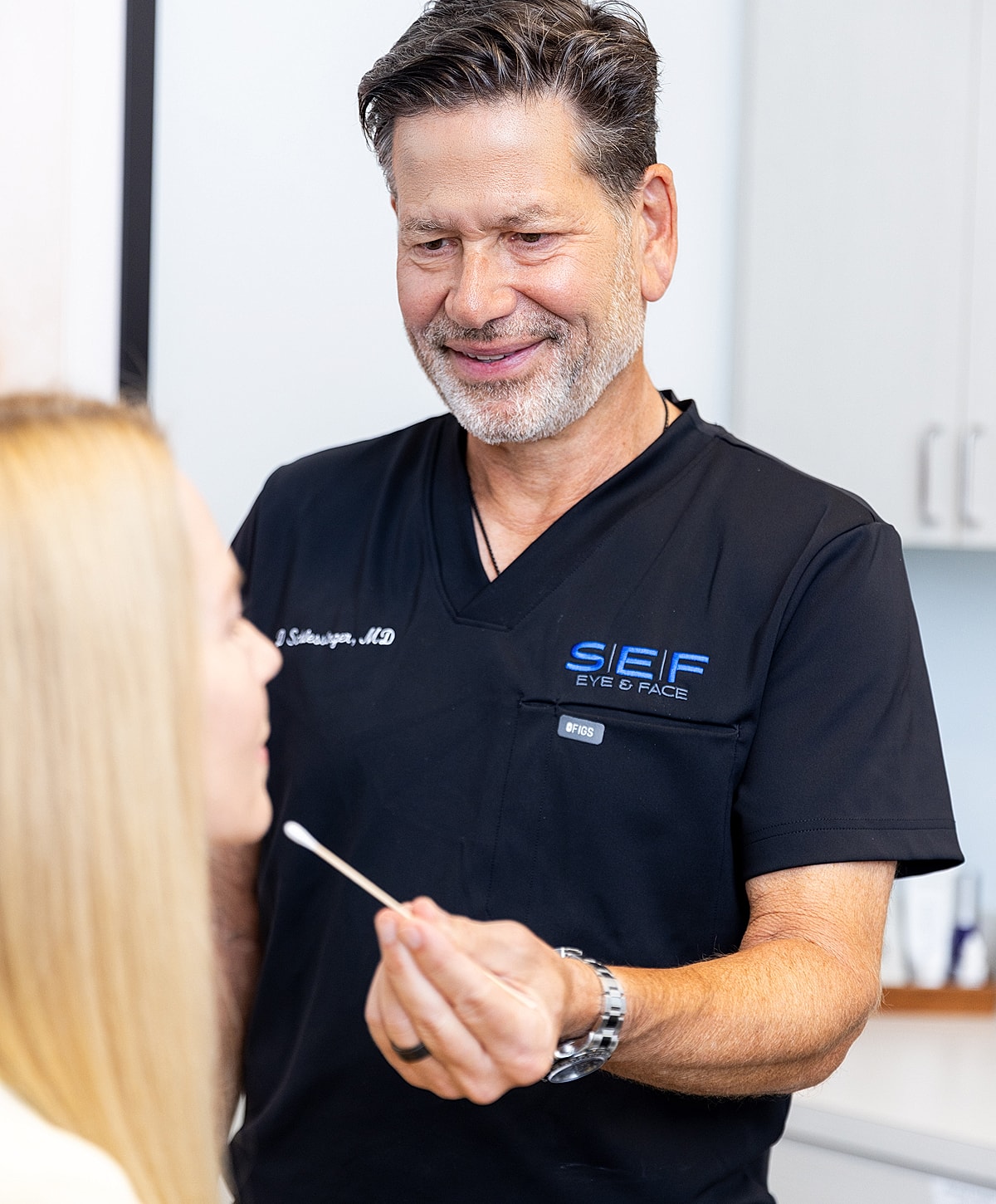
Your treatment journey begins with a private consultation in our Woodbury office, where Dr. Schlessinger evaluates your lower lid fat distribution, tear trough depth, and skin elasticity. On the day of your outpatient surgery, our team ensures you feel relaxed and fully prepared.
Transconjunctival Approach
Incisions are made inside the lower eyelid, leaving no visible external scars. This technique is ideal for patients with bulging fat bags but good skin elasticity. Fat is carefully repositioned into adjacent hollows (fat repositioning) or trimmed to create a flat, smooth contour.
Transcutaneous (Subciliary) Approach
Incisions are placed discreetly just below the lower eyelash line. This technique allows Dr. Schlessinger to reposition excess fat while simultaneously removing redundant, sagging skin and tightening loose lower lid muscles (canthopexy/canthoplasty) to prevent lower lid sagging.
The procedure is performed under local anesthesia combined with gentle intravenous sedation to ensure complete comfort. Dr. Schlessinger makes fine incisions either inside the lower lid or just beneath the lash line. Herniated fat pads are meticulously repositioned across the orbital rim to soften dark tear trough hollows. Any excess loose skin is carefully trimmed, and the lower lid margin is stabilized before delicate sutures are placed. After resting briefly in our recovery space, you return home the same day.
Correct Lower Lid Sagging
Lower eyelid surgery specifically targets the lower eyelids, subciliary lash line, infraorbital fat pads, tear troughs, and the upper cheek junction (lid-cheek junction).
Lower blepharoplasty provides targeted correction for aesthetic concerns affecting the lower eyelids and midface:
Repositions or removes protruding orbital fat pads beneath the eyes.
Blends dark grooves between the lower lid and cheek by draping fat over the cheek bone.
Tightens fine, loose skin folds under the eyes.
Eliminates casting shadows created by bulging fat mounds.
Restores firm, youthful support along the lower lash margin.
Reclaim Smooth Youthful Eyes
Eliminates Fatigue and Dark Shadows
Removing bulging fat mounds eliminates the shadows that make you look tired, restoring a bright, well-rested appearance.
Advanced Fat Repositioning
Instead of simply removing fat, Dr. Schlessinger repositions natural fat into hollow tear troughs, creating a smooth, youthful transition into the cheek without a hollow look.
Virtually Invisible Incisions
Incisions are completely concealed inside the eyelid or hidden immediately along the lower eyelash line, fading into fine, imperceptible lines.
Long-Lasting Surgical Results
Lower eyelid fat repositioning provides permanent structural correction, delivering smooth undereye contours that endure for decades.

Achieve Smooth Rested Contours
You may be an ideal candidate for lower blepharoplasty if you have persistent undereye bags, deep tear trough shadows, or loose, crepey lower eyelid skin. Ideal candidates are non-smokers in good overall health with realistic expectations for surgical outcomes.
During your consultation, Dr. Schlessinger conducts a detailed evaluation of your eye structure, cheek position, and tear film dynamics. Patients with dry eye symptoms or lower lid laxity will receive a tailored surgical plan to maintain lid stability and eye protection.
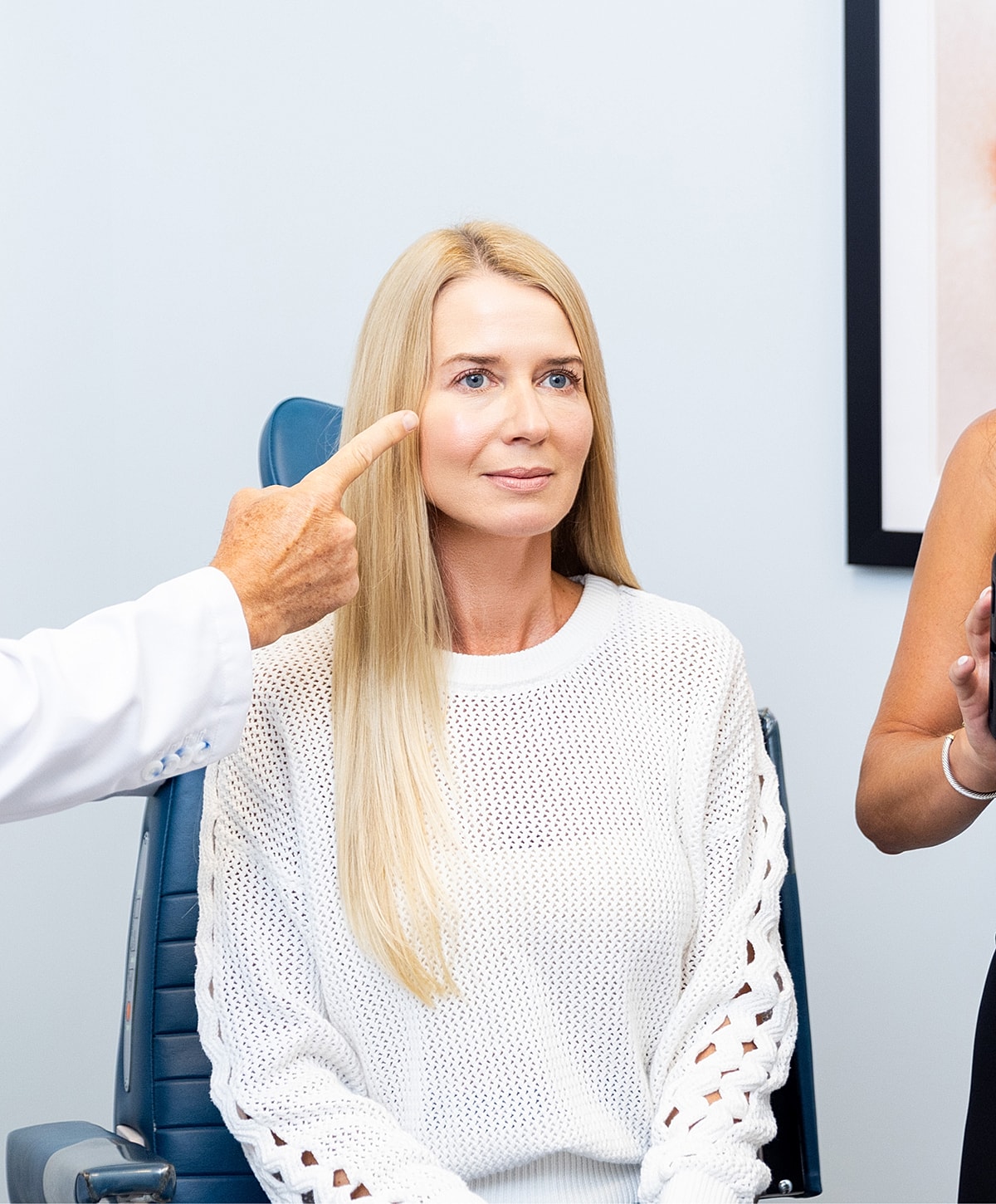
Simple Healing. Effortless Beauty.
Recovery following lower blepharoplasty is straightforward. Most patients report minimal pain, which is easily managed with mild prescribed or over-the-counter medication and cold eye compresses.
Recovery Timeline and Guidelines
As initial swelling clears over the first two weeks, you will see a dramatic improvement in your lower eye region. Undereye bags are smoothed away, dark hollows are filled, and the skin beneath your eyes appears taut and rested.
Because Dr. Schlessinger focuses on structural fat repositioning and muscle stabilization, lower blepharoplasty results are long-lasting, providing smooth, youthful eyes for 10 to 15 years or longer.
Operating on the lower eyelids requires specialized skill to manage fat contours and maintain proper lid position, avoiding complications like ectropion. Dr. David A. Schlessinger, a board-certified physician with fellowship training in oculoplastic surgery, offers over 30 years of expertise in this delicate procedure. His extensive experience ensures precision and care, providing patients with results that enhance both function and appearance.
Take the first step toward smooth, bag-free eyes.
Contact Schlessinger Eye and Face in Woodbury today to schedule your lower blepharoplasty consultation with Dr. Schlessinger.
When performed via the transconjunctival approach, incisions are placed inside the eyelid with zero external scarring. When a transcutaneous approach is used, incisions are placed directly beneath the eyelash line, where they fade into fine, faint lines that blend into your natural features.
No. The procedure is performed under local anesthesia with light intravenous sedation, ensuring you remain completely comfortable and pain-free. Post-procedure tightness or mild soreness is easily managed with cold compresses and mild pain relievers.
Fat repositioning involves shifting bulging lower eyelid fat downward into the hollow tear trough groove instead of simply cutting it away. This restores smooth volume across the upper cheek and prevents a sunken, hollow look.
Most patients take 7 to 10 days off from work and social activities. Any residual mild bruising after day 7 can easily be covered with light mineral concealer.
Yes! Lower blepharoplasty is routinely combined with upper eyelid surgery or CO2 laser resurfacing during a single session to tighten surface skin texture while correcting structural undereye bags.
“I couldn't be happier with the outcome.”