Upper Blepharoplasty

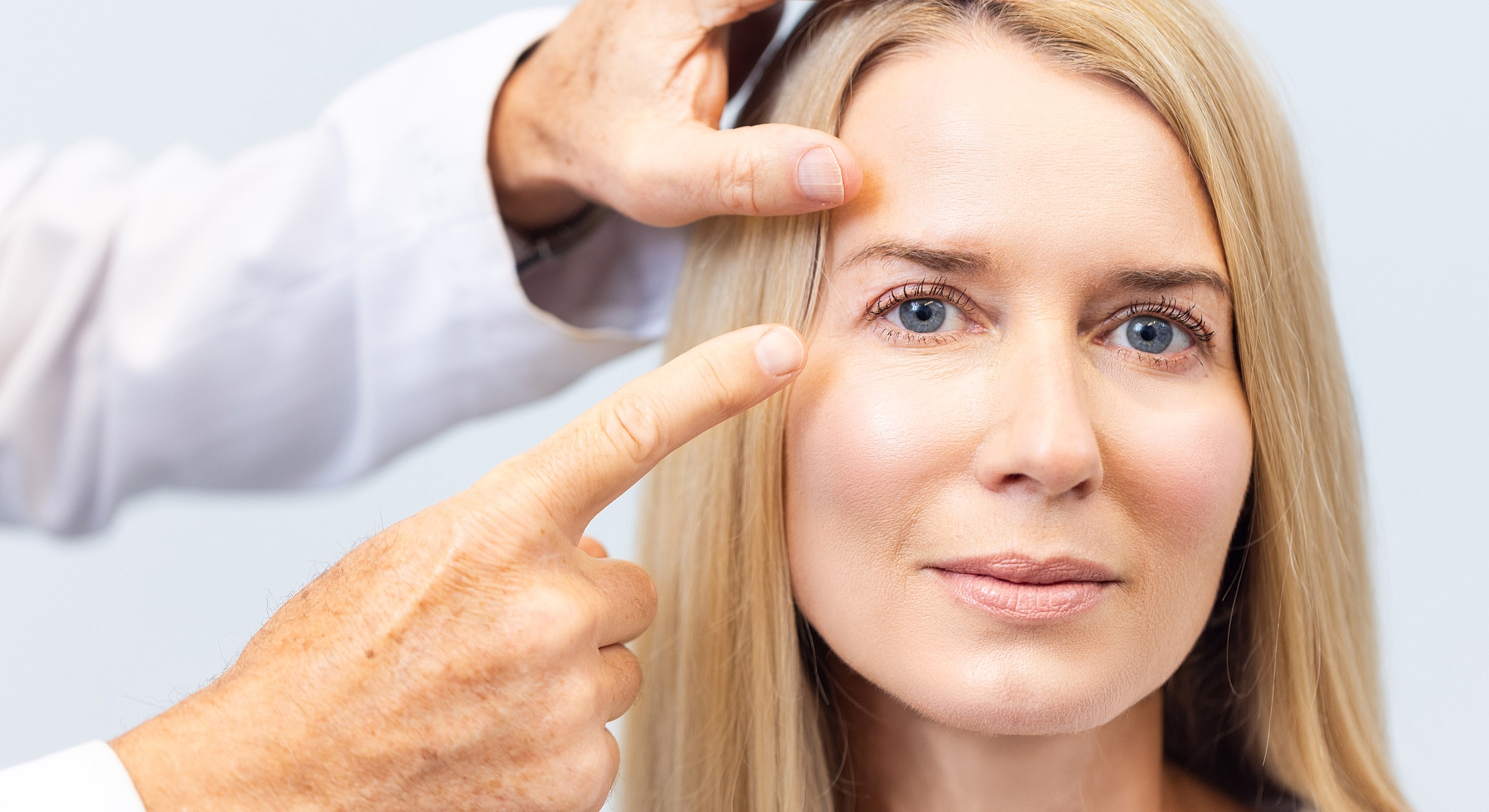
As part of the natural aging process, thin upper eyelid skin loses elasticity, and underlying muscle structures relax. This creates heavy hooding, redundant skin folds, and a fatigued appearance. For many patients, sagging upper eyelid skin weighs down the upper eyelashes, strains the forehead, and in some cases, even physically blocks peripheral vision.
At Schlessinger Eye and Face in Woodbury, NY, board-certified, fellowship-trained oculoplastic surgeon Dr. David A. Schlessinger performs upper blepharoplasty with a steady, practiced hand. With over 30 years of specialized subspecialty care, Dr. Schlessinger can restore a clean upper eyelid crease and open eye contour while preserving your natural facial expressions. Learn more about your upper blepharoplasty options, and then schedule your consultation with Dr. Schlessinger today.

Outpatient surgical procedure focused specifically on removing excess upper eyelid skin, tightening loose tissue, and repositioning underlying fat.
Precise, in-office or outpatient procedure taking approximately 45 to 60 minutes.
Clears obstructed upper peripheral vision, eliminates heavy lid hooding, restores a clean eyelid crease, and reduces forehead fatigue.
Expect 5 to 7 days of mild swelling and bruising; sutures are removed within a week, revealing open, rested upper eyelid contours.
Lifting the Lid
Upper blepharoplasty (commonly called an upper eyelid lift) is a surgical procedure that corrects sagging skin and excess tissue on the upper eyelids. Because the upper lid protects the ocular surface and helps regulate lubrication, your surgeon must work carefully to ensure eye safety and a flush lid closure.
For his upper blepharoplasty surgeries, Dr. Schlessinger places tiny incisions directly inside the natural upper eyelid crease. Through this concealed pathway, he removes excess skin folds, trims lax muscle, and repositions or removes herniated upper fat pads (especially at the inner corner of the eye). If muscle weakness also causes eyelid drooping, Dr. Schlessinger will perform a simultaneous ptosis repair to lift the eyelid margin.

An Eye for Detail
Your treatment journey begins with a private consultation in our Woodbury office, where Dr. Schlessinger evaluates your upper lid folds, eyebrow position, and visual field. On the day of your surgery, our team ensures you feel relaxed and completely comfortable.
The procedure is performed on an outpatient basis using local anesthesia combined with mild intravenous sedation. Once the upper eyelid region is completely numb, Dr. Schlessinger marks your natural eyelid crease and precisely measures the skin to be removed. He makes discreet incisions along the crease, removes excess skin and fat, and tightens underlying structures. Incisions are closed using ultra-fine sutures. After resting briefly in our recovery space, you return home the same day.
An Elevated Look
This procedure specifically targets the upper eyelids, upper eyelid crease, and medial fat pockets, creating a seamless transition toward the brow bone and temple.
Upper blepharoplasty treats the following concerns:
Removes heavy skin folds that hang over the upper lashes.
Clears hooding skin that blocks upper and lateral sight lines.
Re-establishes a crisp, defined crease for easier cosmetic application.
Relieves chronic forehead muscle fatigue caused by constantly lifting eyebrows to see clearly.
Smooths puffiness along the upper medial eye corner.
Rebalances uneven upper skin folds and lid height between eyes.
A Sight For Your Eyes
Restores Your Full Field of Vision
Removing sagging upper skin folds opens your upper visual field, resolving eye fatigue, brow strain, and tension headaches caused by heavy lids.
Creates a Naturally Refreshed Look
Dr. Schlessinger tailors tissue removal to your unique facial features, ensuring your eyes look brighter and rested without appearing pulled or unnatural.
Virtually Invisible Scarring
Because surgical incisions are hidden directly within the natural upper eyelid crease, fully healed scars blend imperceptibly into your skin folds.
Long-Lasting Surgical Results
Upper eyelid surgery addresses structural tissue changes, providing open, comfortable, and beautiful eyes for 10 to 15 years or longer.

Precision in Rejuvenation
You may be an ideal candidate for upper blepharoplasty if you have heavy, sagging upper eyelid skin, loss of your natural eyelid crease, or vision obstruction caused by hanging tissue. Ideal candidates are non-smokers in good overall health with realistic surgical expectations.
During your consultation, Dr. Schlessinger conducts a comprehensive examination. If upper eyelid skin significantly blocks your visual field, we can perform visual field testing to document medical necessity for insurance coverage.
See the Difference
Recovery following upper blepharoplasty is generally fast and manageable. Most patients experience minimal discomfort, easily controlled with mild pain medication and cooling eye compresses.
Recovery Timeline and Guidelines
As initial swelling clears over the first two weeks, you will enjoy immediate functional improvements in your peripheral vision and a noticeably open, rested appearance.
Because Dr. Schlessinger preserves natural anatomical structures while removing excess tissue, your final results settle smoothly into your facial features, preserving your authentic eye shape for years to come.

Specialty Experience You Can Trust
Operating on the upper eyelids requires an expert understanding of ocular safety, tear film function, and subspecialty aesthetic balance. As a board-certified physician fellowship-trained in oculoplastic surgery, Dr. David A. Schlessinger brings over 30 years of dedicated experience to every upper eyelid lift.
At Schlessinger Eye and Face in Woodbury, NY, your care is completely physician-led.
Take the first step toward clear vision and refreshed eyes.
Contact Schlessinger Eye and Face in Woodbury to schedule your Upper Blepharoplasty consultation with Dr. Schlessinger.
Incisions are placed precisely within the natural upper eyelid crease. Once healed, scars fade into fine, faint lines that remain hidden whenever your eyes are open.
No. The procedure is performed under local anesthesia with sedation, ensuring you feel no pain during surgery. Post-procedure soreness is minimal and easily managed with cold compresses and mild pain relievers.
If drooping upper eyelid skin sags below the lid margin and blocks your upper peripheral vision, insurance may cover the functional portion of the procedure. Our office will perform visual field testing to help evaluate your coverage.
Most patients take 7 to 10 days off from work and social engagements. Sutures are removed around days 5 to 7, after which light makeup can be applied.
Upper blepharoplasty removes excess sagging skin and fat from the eyelid. Ptosis repair tightens the underlying levator muscle to lift a low-hanging eyelid margin. Dr. Schlessinger often combines both techniques when necessary.
“I couldn't be happier with the outcome.”