Ptosis – Droopy Eyelid Treatment

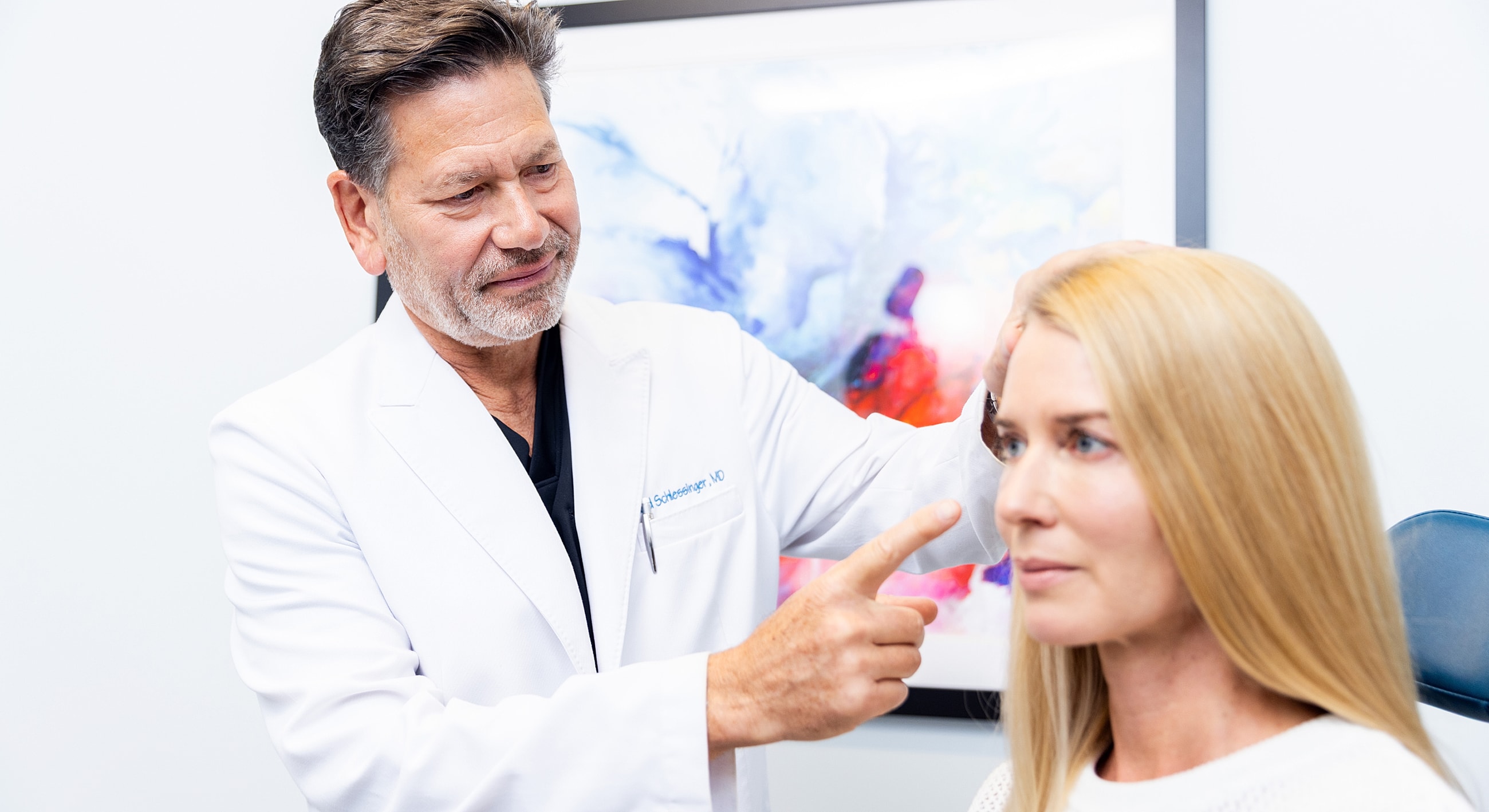
When one or both eyelids begin to droop significantly, the margin of the upper eyelid falls lower than its normal position. Known medically as upper eyelid ptosis, this condition causes a heavy, tired appearance and can physically block the pupil, obstructing your upper field of vision and forcing you to constantly strain your forehead muscles to see clearly. Many patients feel self-conscious about their uneven eyelid appearance, while others struggle with daily eye fatigue.
At Schlessinger Eye and Face in Woodbury, NY, ptosis surgery is performed by board-certified oculoplastic specialist Dr. David A. Schlessinger. Bringing over 30 years of subspecialty care in eye surgery to patients across Long Island, Dr. Schlessinger evaluates the delicate nerves that control eyelid movement and tightens weakened eyelid muscles to lift drooping lids, improve your vision, and restore natural facial balance.

Surgical procedure that tightens, advances, or re-anchors the internal levator muscle to lift a low-hanging upper eyelid.
Outpatient procedure typically taking 45 to 60 minutes per eyelid under local anesthesia with sedation.
Elevates droopy eyelids away from the pupil, clears obstructed upper peripheral vision, eases forehead strain, and corrects asymmetric eyelid position.
Expect 7 to 10 days of mild swelling and bruising; vision improves immediately, with the natural eyelid position settling over a few weeks.
Understanding Drooping Eyelids
A drooping eyelid can be a cosmetic concern, or it can hang low enough to impair vision. The clinical term for this is ptosis, also known as blepharoptosis. It occurs in children but is more common in adults, as the eyelid tissues weaken with age. Dr. Schlessinger performs eyelid surgery to correct ptosis.
Ptosis occurs when the levator muscle responsible for lifting the upper eyelid stretches, detaches, or weakens. Ptosis can affect one or both eyelids. It differs from eyelid skin sagging, which is typically treated with blepharoplasty. However, excess skin and muscle weakness often occur together and can be corrected during the same surgical procedure.
Ptosis is obvious in that the asymmetry caused by a drooping eyelid is readily apparent. The condition isn’t painful. There are differences in symptoms between adults and children.
In adults, ptosis usually develops over time as the levator muscle stretches or separates from the eyelid. In most cases, this is due to aging, as the skin and muscles around the eyes become weaker. But ptosis can also develop following eye surgery, such as LASIK or cataract surgery.
In rare cases, ptosis can be a symptom of a more serious condition. Inflammation, tumors, and neurological disease can also cause ptosis. It is important to have a ptosis evaluation to check for any underlying medical conditions.
Causes of ptosis include:
Natural Aging (Aponeurotic Ptosis): The most common cause, where the levator tendon gradually stretches and slips from its normal insertion on the eyelid over time.
Congenital Factors (Congenital Ptosis): Present at birth due to poorly developed levator muscle fibers. In severe cases, early surgical intervention is crucial to prevent amblyopia (lazy eye) in children.
Previous Eye Surgery and Contact Lenses: Long-term rigid contact lens wear or trauma from prior eye surgery (such as cataract removal) can stretch the levator muscle.
Neurological Disorders and Nerve Damage: Conditions like third nerve palsy, Horner’s syndrome, or myasthenia gravis disrupt the nerves controlling the levator muscle.
During your comprehensive eye examination, Dr. Schlessinger evaluates whether your drooping is aponeurotic, myogenic, or neurogenic before recommending surgical correction or other treatments.
Congenital ptosis, where the child is born with the condition, is usually caused by a problem with the levator muscle that lifts the eyelid. Beyond the drooping eyelid, another symptom is when the child’s upper eyelid creases don’t line up evenly between both eyes. Often, a child with ptosis will develop habits of tilting the head backward, lifting the chin, or forcing the eyebrows upwards to attempt to overcome the vision impairment caused by the drooping eyelid. In many cases, both eyelids can drop.
Ptosis in adults is usually caused by the weakening of eyelids. It can also cause difficulty in reading and vision.

Precise, Comfort-Focused Care
Your treatment journey begins with a thorough eye examination and medical history evaluation in our Woodbury office. Dr. Schlessinger measures your eyelid position, levator muscle function, pupil size, and screens for dry eye syndrome to ensure the safest treatment options.
Ptosis repair is an outpatient procedure performed under local anesthesia with light sedation. Working through an external approach, Dr. Schlessinger places a fine incision within the natural folds of the upper eyelid crease to minimize scarring. He then tightens and reattaches the weakened levator muscle to the tarsal plate. He will ask you to open your eyes to ensure the levator muscle is advanced to the correct degree to restore natural movement and a symmetrical appearance.
In severe cases with very poor muscle function, a frontalis sling procedure may be performed, connecting the eyelid to the forehead muscles above the eyebrow so forehead movement lifts the lid. Once proper position is established, delicate sutures are placed, and you return home after a short rest in our recovery suite.


Address Strain, Vision Problems, and Asymmetry
Surgical correction restores proper lid function, improves your visual range, and gives the eye area a more youthful, balanced appearance.

Tightens stretched levator tendons caused by aging or mechanical wear.
Lifts low-hanging eyelid margins that physically block upper and lateral sight lines.
Rebalances uneven eyelid margins when one eyelid sits lower than the other.
Relieves tension headaches and forehead wrinkles caused by constantly lifting eyebrows to see.
Corrects low-hanging eyelids in young or adult patients born with underdeveloped muscles.
Reconstructs torn or detached levator tendons following previous eye surgery or facial injury.
Dermatochalasis is a common condition characterized by the presence of loose, redundant eyelid skin. It is a very common sign of aging and in general begins in middle age. Patients with severe dermatochalasis experience heaviness around the eyes, brow-aches, eyelashes in the visual field, and reduction of the superior visual field. Lower eyelid dermatochalasis is considered a cosmetic issue unless the excess skin and prolapsed fat are so extreme that the patient is unable to be fitted with bifocals. Dermatochalasis is treated surgically by a procedure called blepharoplasty.
Floppy eyelid syndrome is a condition of the eyes indicated by ocular irritation, redness, eyelash ptosis, and mild mucus discharge described as worse upon awakening. Floppy eyelid syndrome is a common cause of recurrent conjunctivitis and is frequently misdiagnosed. It is also very commonly associated with sleep apnea. When Floppy Eyelid Syndrome is diagnosed, a sleep study should be performed.
A Clearer View
Restores Your Full Field of Vision
Lifting a low eyelid margin away from the pupil instantly opens your upper field of vision, resolving chronic eye strain, vision impairment, and forehead tension.
Restores Rested Facial Symmetry
Dr. Schlessinger carefully adjusts both eyelids during surgery, eliminating the tired appearance caused by droopy eyelids and restoring natural balance to your face.
Minimizes Visible Scarring
Incisions are discreetly placed within the upper eyelid crease, ensuring post-healing scars remain hidden when your eyes are open.
Long-Lasting Structural Correction
Reattaching or shortening the underlying levator muscle provides permanent structural support, allowing most patients to enjoy open, comfortable sight for decades.

Achieve Natural Eyelid Symmetry
You may be a good candidate for ptosis repair surgery if you have drooping upper eyelids that obscure your field of vision, cause chronic forehead strain, or make you feel self-conscious about your appearance. Candidates should be in good overall health to undergo surgery.
During your consultation, Dr. Schlessinger conducts a comprehensive eye examination and reviews your complete medical history. Blood tests or neurological evaluations may be recommended if underlying health conditions like myasthenia gravis or third nerve palsy are suspected. If drooping significantly blocks peripheral vision, visual field testing can document medical necessity for health insurance coverage.
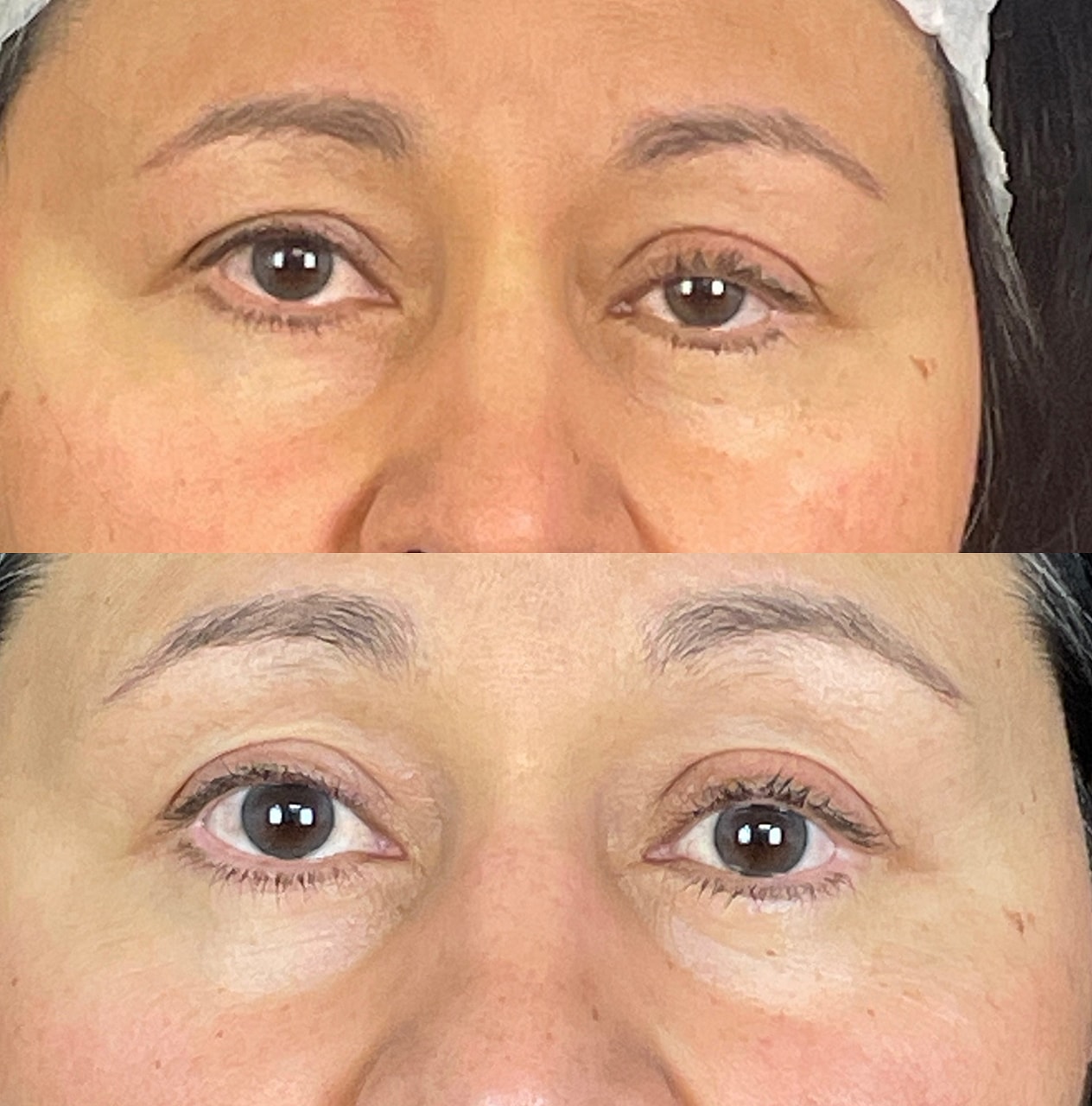
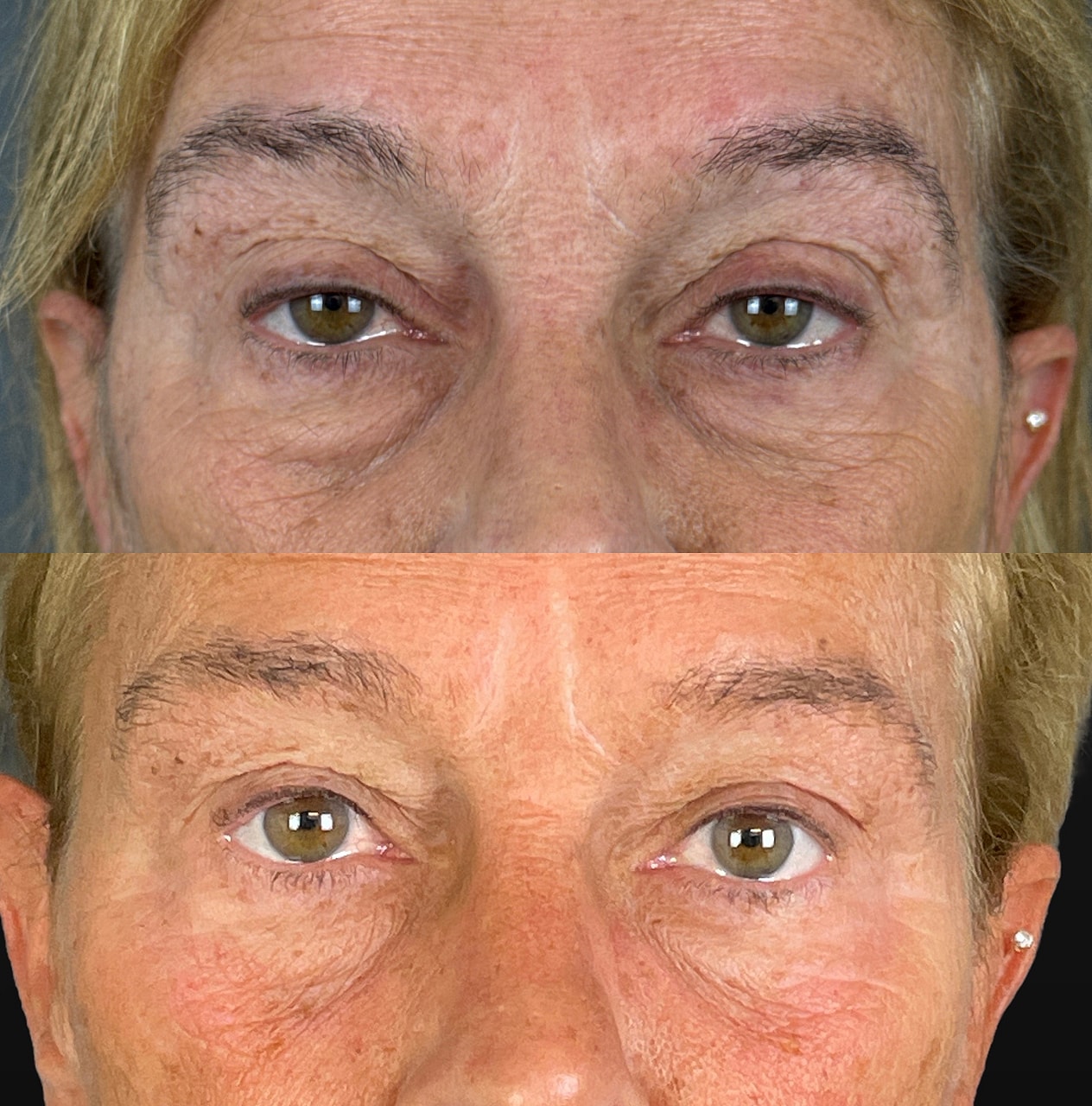
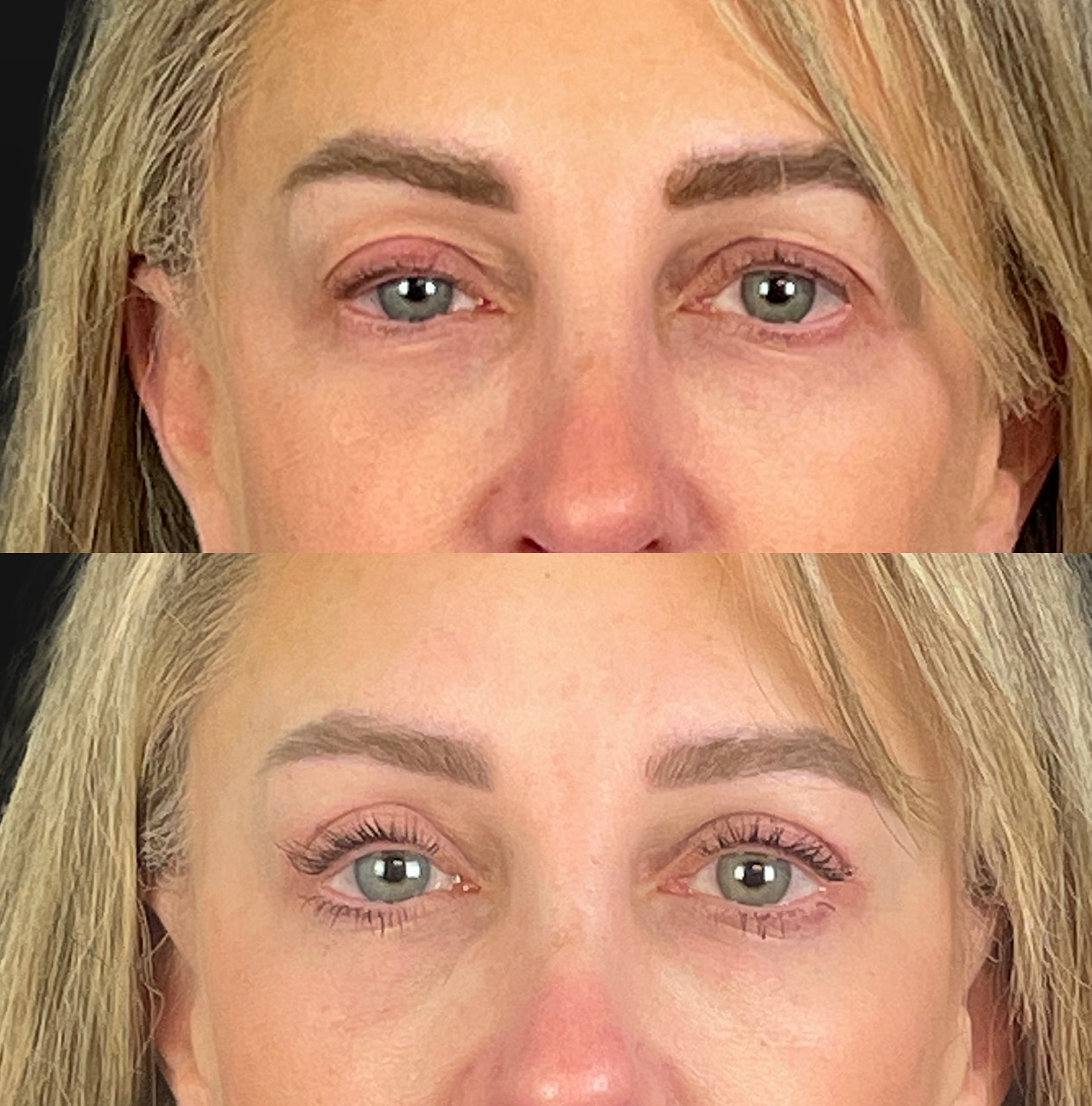
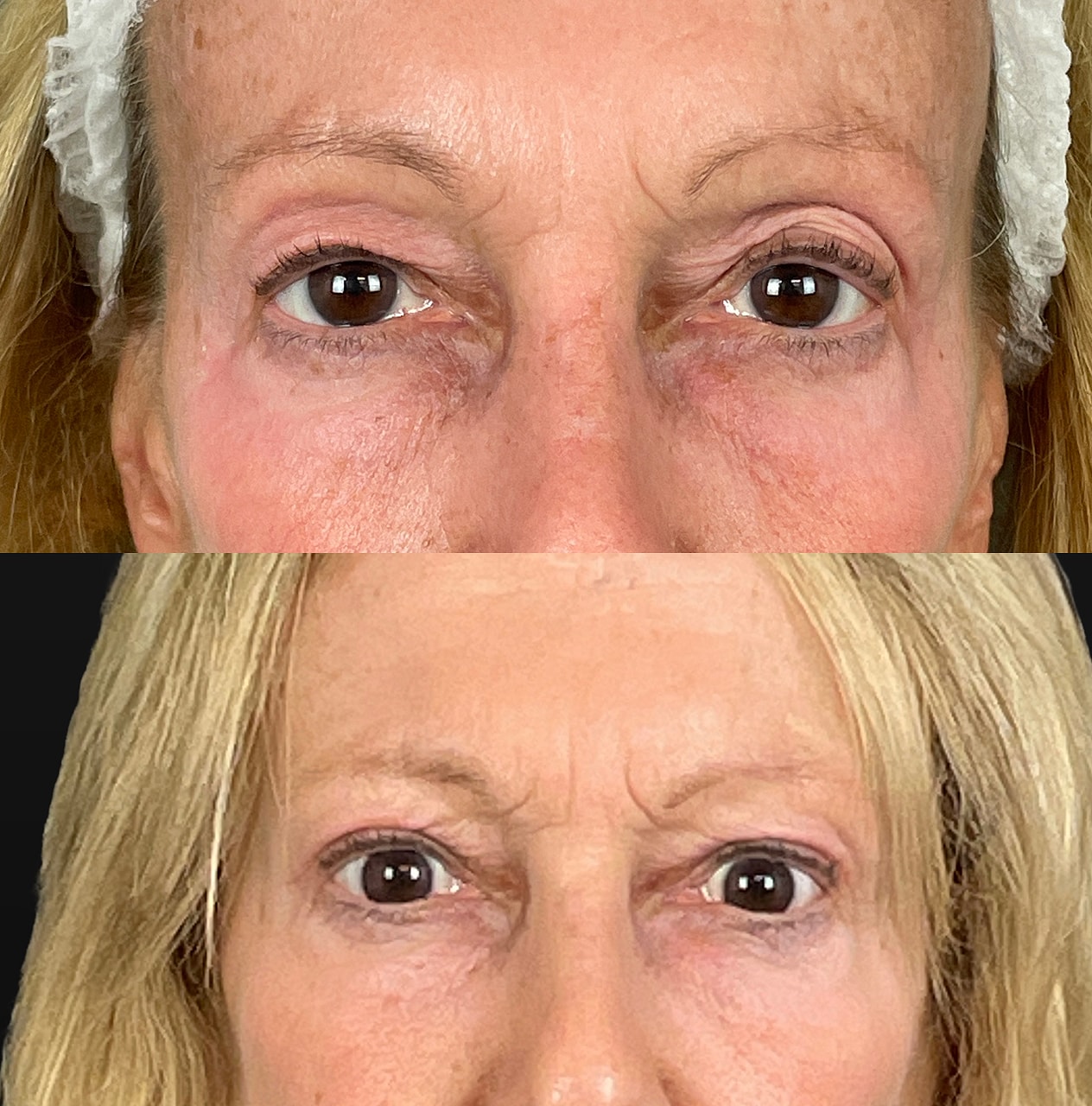
1 of 8
Brighter and Lighter
There will be some swelling and bruising around the eye and cheek area. Because the eye will now have more exposure, we will provide you with artificial to help keep it lubricated after your surgery. Your sutures will usually be removed in about one week, and most patients can return to work at that time. Bruising can last up to two weeks. Some swelling can come and go over a few weeks or sooner, but it is not dramatic.
Days 1–3: Swelling and light bruising around the upper eyelid peak early. Keep your head elevated on extra pillows and apply cold compresses regularly.
Days 5–7: Suture removal takes place at our Woodbury office. Most swelling and bruising resolve significantly during this initial window.
Weeks 2–3: Most patients return to work and normal activities within 7 to 10 days. The final eyelid position settles smoothly over a few weeks.
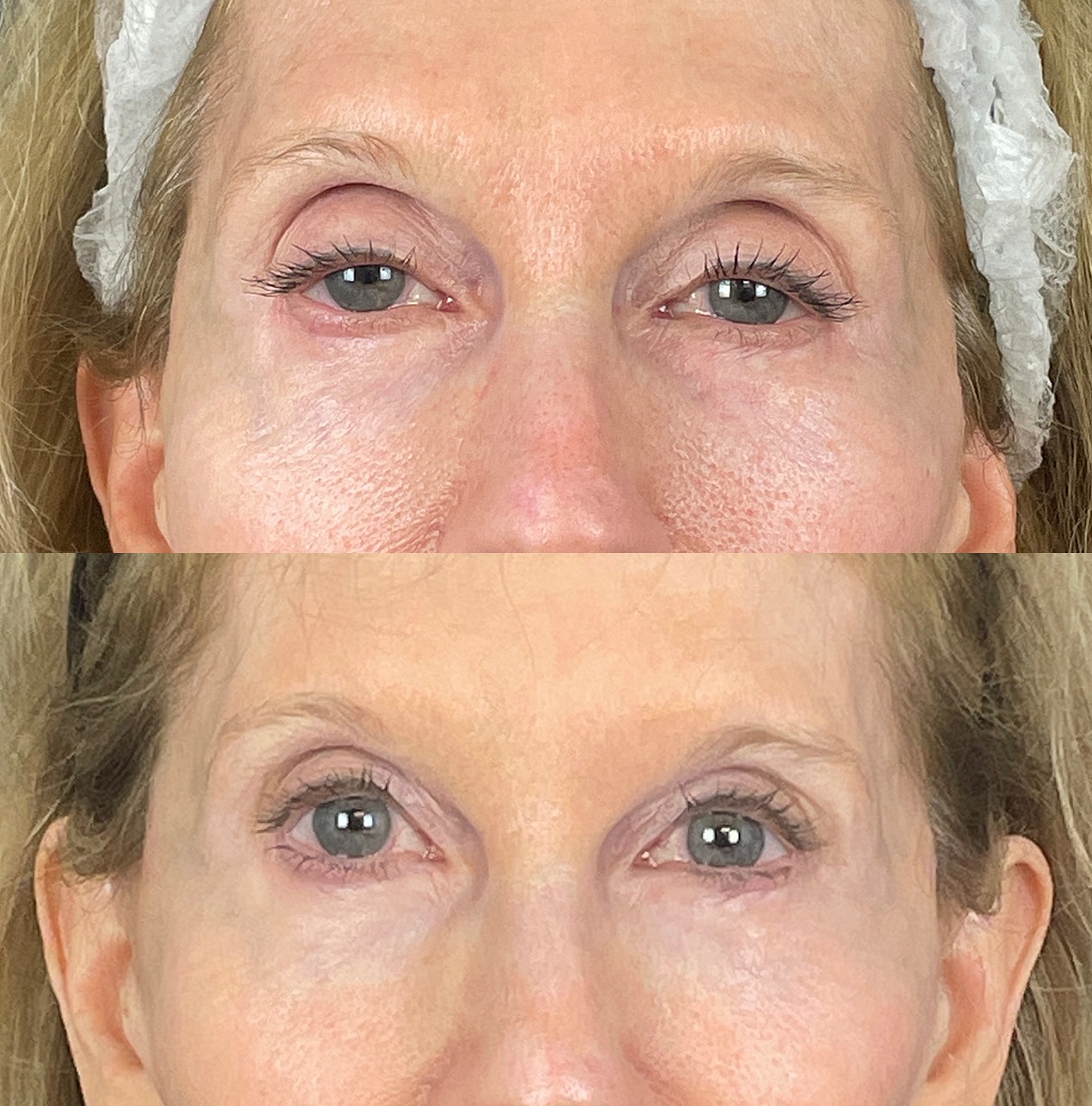
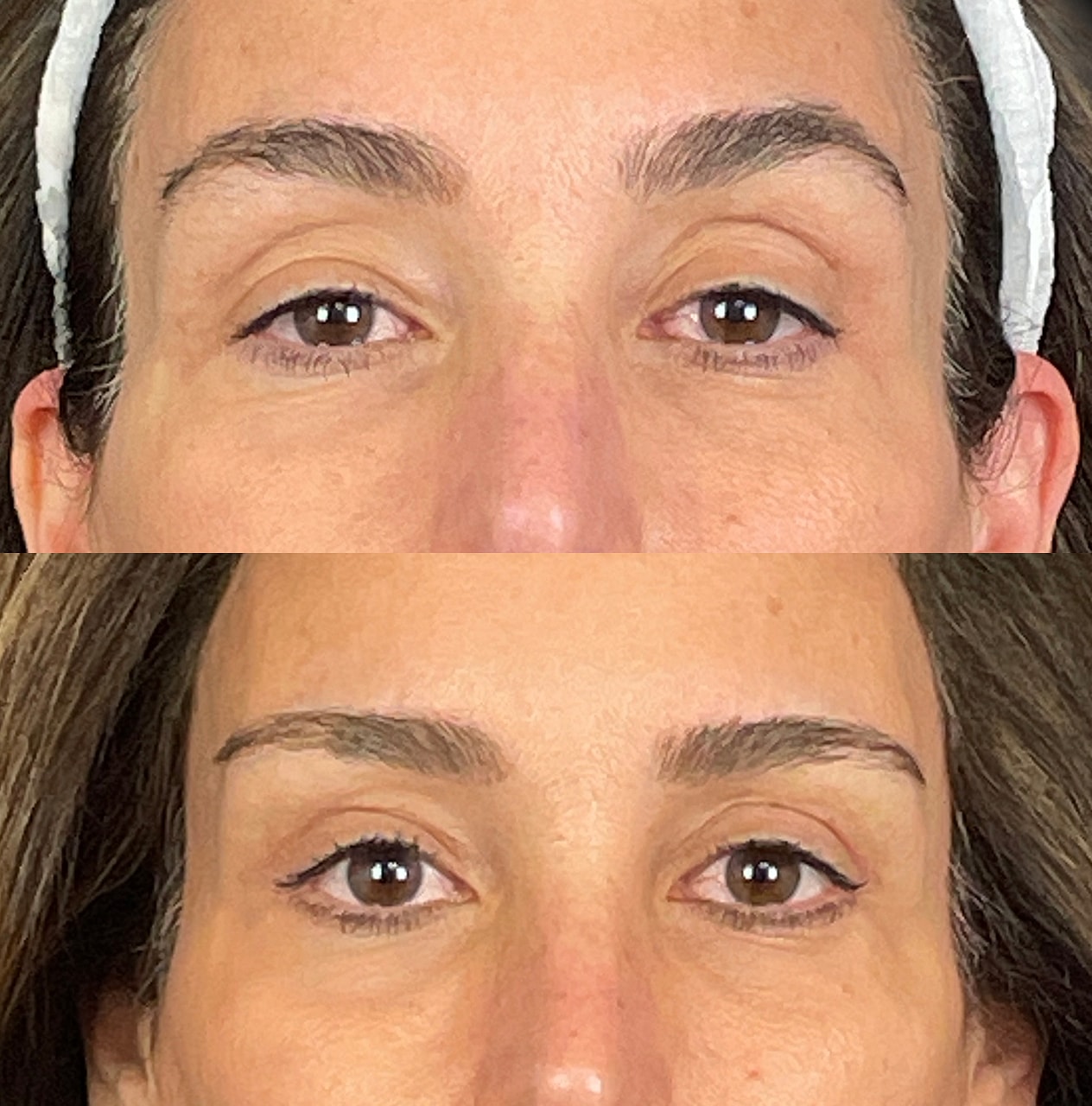
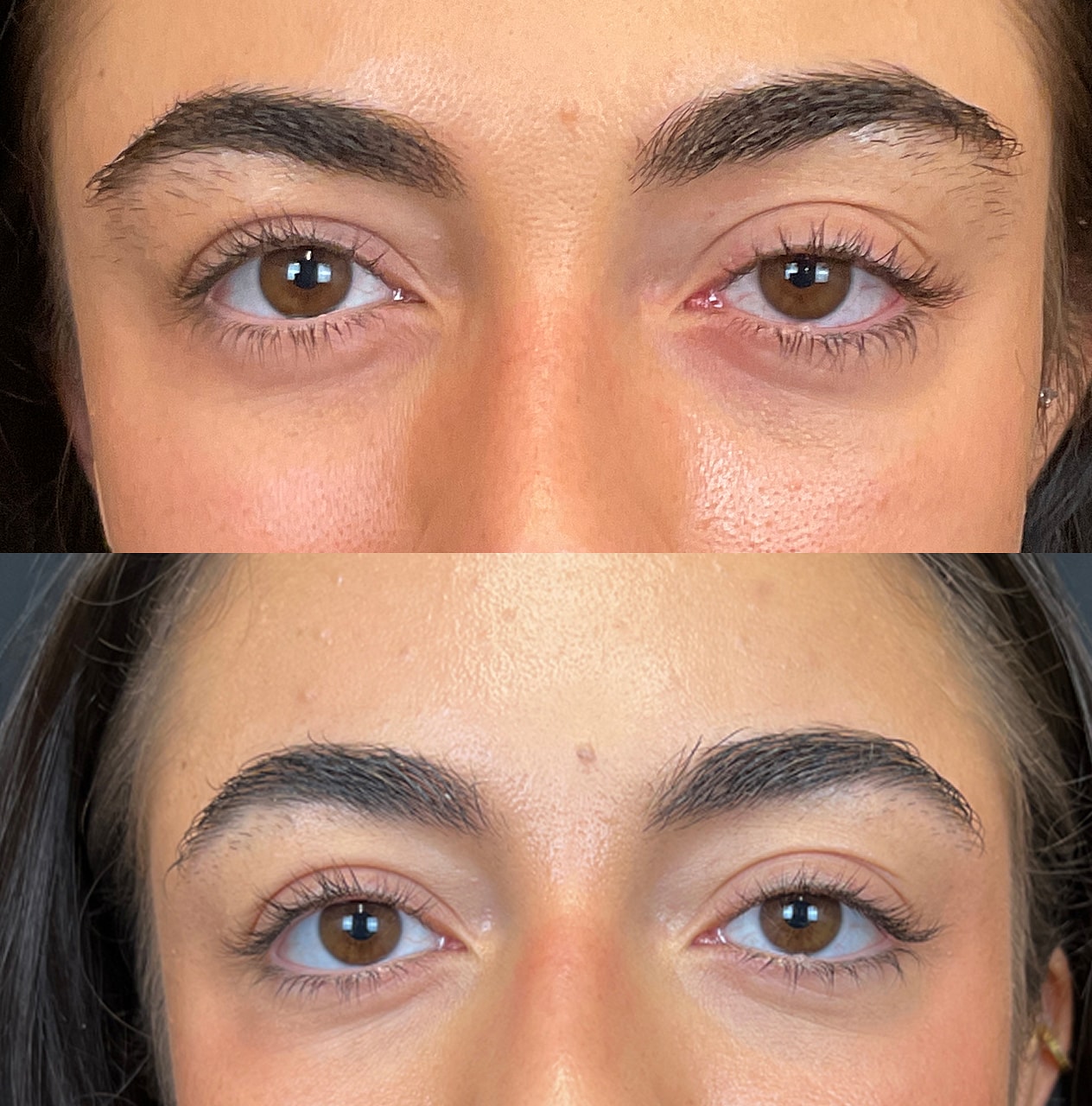
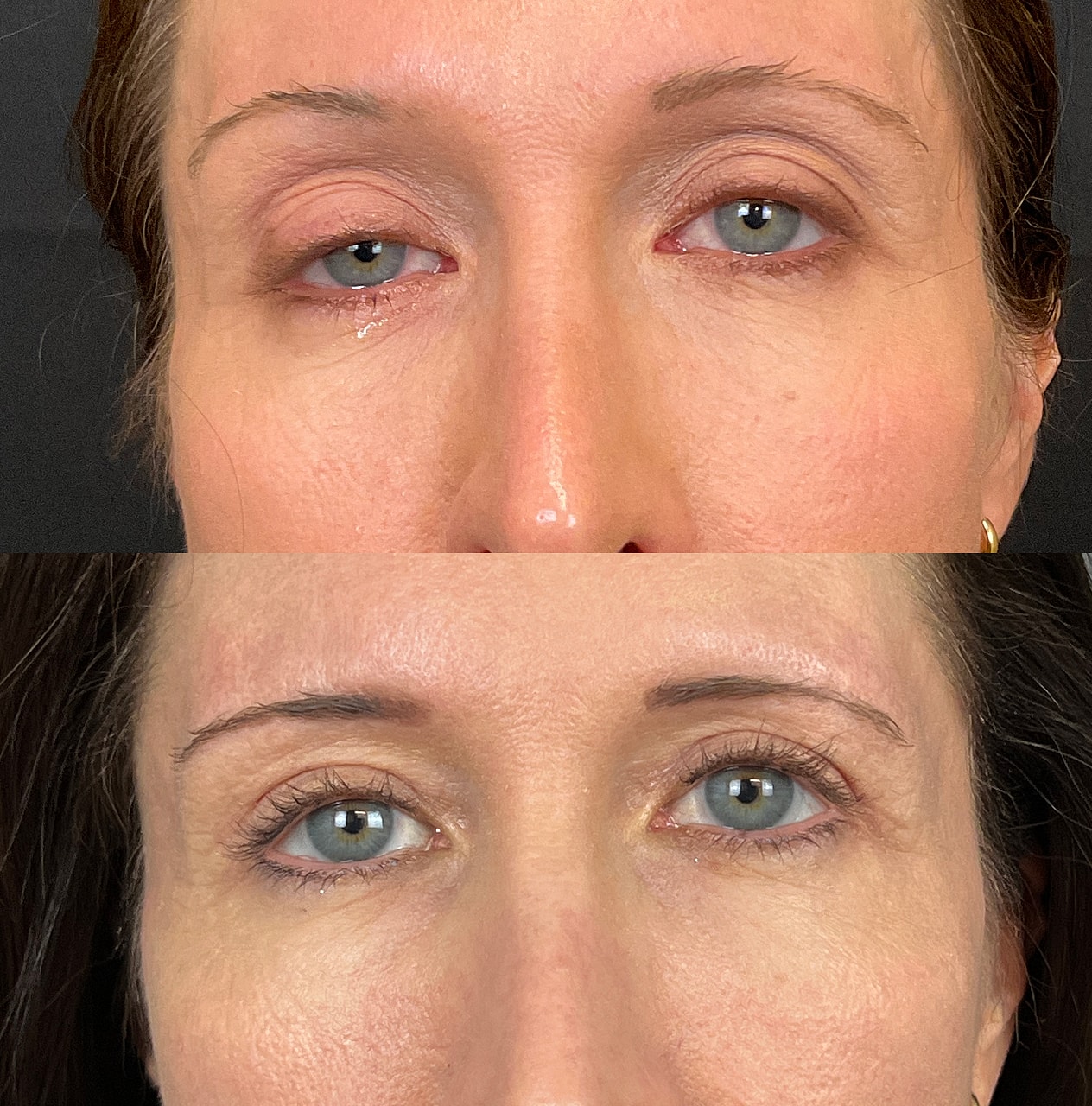
As initial swelling clears over the first two weeks, you will see a dramatic improvement in your upper field of vision and a rested, symmetric eyelid appearance.
Because Dr. Schlessinger precisely recalibrates internal muscle tension while you are comfortably awake in the operating chair, your surgical correction provides lasting functional elevation and natural facial balance.

Specialized Care Focused on You
Treating upper eyelid ptosis requires specialized medical judgment to avoid over-correction or under-correction while protecting essential corneal lubrication. As a board-certified physician with fellowship training in oculoplastic surgery, Dr. David A. Schlessinger brings over 30 years of subspecialty excellence to every ptosis repair surgery.
Take the first step toward clear vision and balanced eyelids.
Contact Schlessinger Eye and Face in Woodbury today to schedule your personal ptosis consultation with Dr. Schlessinger.
The cost of this procedure with Dr. Schlessinger varies depending on the patient. For instance, some patients require just a minor adjustment to the levator muscle. Others require full blepharoplasty, plus an adjustment to that muscle. During your consultation, we can give you a good idea of what the potential cost of your surgery will be. If the ptosis is causing visual impairments, it may be caused by health issues.
Blepharoplasty removes excess skin and fat from sagging eyelids. Ptosis repair tightens or reattaches the underlying levator muscle to lift a low eyelid margin off the pupil. Dr. Schlessinger routinely combines both procedures when patients have both weak muscles and excess skin.
When a drooping eyelid drops below the upper pupil margin and obstructs your peripheral vision, ptosis repair surgery is considered medically necessary and is often covered by health insurance plans. Our office will conduct visual field testing to help document your coverage.
In mild cases of acquired ptosis, prescription eye drops (such as oxymetazoline) can temporarily stimulate Müller's muscle to lift the eyelid slightly. However, surgical correction remains the only permanent solution for structural levator muscle weakness.
Incisions are made within the natural folds of the upper eyelid crease. Once healed, scars fade into fine, faint lines that remain hidden whenever your eyes are open.
Mild swelling, bruising, and temporary dry eyes are normal during early healing. Applying prescribed lubricating eye drops and cooling compresses keeps your eyes comfortable as tissue settles over a few weeks.
“I couldn't be happier with the outcome.”