Reconstructive
Oculoplastic Surgery

The skin, muscles, and delicate tissue surrounding your eyes play a crucial role in how you look, communicate, and see the world around you. When heavy upper lids, droopy skin, tear duct blockages, or other changes begin affecting your vision or confidence, general cosmetic surgery is not enough. You need care focused on the unique anatomy of the eye area.
At Schlessinger Eye and Face in Woodbury, NY, oculoplastic surgery bridges the gap between vision health and aesthetic rejuvenation. Board-certified physician Dr. David A. Schlessinger brings over 30 years of fellowship-trained oculoplastic expertise to every treatment plan. Serving patients across Long Island, Dr. Schlessinger provides compassionate care designed to restore natural facial harmony and optimal eye health.

Subspecialty surgical and reconstructive procedures focusing on the eyelids, orbit (eye socket), tear drainage systems, and surrounding facial structures.
Cosmetic and functional surgery for drooping eyelids, eyelid ptosis, ectropion, entropion, orbital trauma, skin cancer reconstruction, and tear duct blockages.
Clears obstructed peripheral vision, corrects drooping or turned eyelids, restores tear drainage, repairs facial trauma, and delivers natural, refreshed cosmetic outcomes.
Recovery typically ranges from 7 to 14 days of mild swelling and bruising; functional vision improvements are immediate, with aesthetic results becoming more refined over several weeks.
Refine and Restore
Oculoplastic surgery, also known as oculofacial plastic surgery, is a subspecialty within the field of ophthalmology that includes surgical procedures that deal with the orbit (eye socket), eyelids, tear ducts, and the face. An oculoplastic surgeon also performs reconstruction of the eye and surrounding areas.
Because the eye area is extremely delicate and essential for sight, oculoplastic surgeons undergo rigorous fellowship training after completing ophthalmology residency training focused on safety, function, and aesthetics.
Unlike general cosmetic surgeons who treat the whole body, an oculoplastic specialist focuses only on the delicate structures of the eye. Dr. Schlessinger uses advanced surgical techniques to correct structural abnormalities, resolve visual obstructions, and enhance natural beauty without compromising the lubrication systems or protective mechanics of the eyes.

Upper and lower eyelid surgery removes excess sagging skin, muscle, and puffiness to restore an open, rested eye appearance while improving obstructed upper vision fields.
Entropion repair corrects outward-turning (ectropion) or inward-turning (entropion) eyelids to prevent painful eye irritation, chronic tearing, and corneal surface damage.
Surgical repair of complex eye socket fractures and facial bone trauma to restore proper eye positioning and protect essential optic nerves.
Shortens or tightens weakened internal eyelid muscles to elevate sagging lids that obstruct vision or create an uneven appearance.
Surgical removal of eyelid skin cancers paired with precise aesthetic reconstruction to preserve natural eyelid contours and eye lubrication.
Opens blocked lacrimal drainage pathways to resolve chronic watery eyes, pooling tears, and recurrent tear sac infections.
Diagnostic evaluations and non-surgical or surgical care tailored to correct overproduction of tears or poor drainage dynamics.
Precision Eye Contours
Your surgical experience is planned in detail during your consultation with Dr. Schlessinger. On the day of your outpatient surgery, our team prepares you in a comfortable, relaxed environment. Anesthesiology care is coordinated to ensure you remain pain-free and comfortable throughout your procedure using local anesthesia with gentle intravenous sedation.
Dr. Schlessinger will walk you through the steps of your procedure so you know exactly what to expect on surgery day. His techniques prioritize tissue preservation and symmetry. All incisions are closed with delicate sutures to keep scars fine and discreet. You will be monitored in a comfortable recovery area before returning home the same day to rest.

As an Oculoplastic Surgeon in New York, Dr. Schlessinger has advanced training that makes him uniquely qualified to treat the delicate skin of the eyelid and face.
Dr. Schlessinger is often called upon by his peers to treat and manage the most challenging and difficult eyelid surgical cases. He performs corrective and revision eyelid and facial and reconstructive surgery for both trauma and cancer cases. A true eyelid specialist, Dr. Schlessinger places particular emphasis on restoring and preserving the function and beauty of the eyes. His goal is to provide the most natural result possible.
Essential Eye Health & Lasting Balance
Restores Obstructed Peripheral Vision
Elevating heavy upper lid skin and repairing ptosis opens your upper visual field, easing eye strain, brow fatigue, and headaches caused by constantly lifting your forehead to see clearly.
Protects Long-Term Corneal and Eye Health
Correcting inward- or outward-turning eyelids ensures your eyes close completely and maintain proper tear film distribution, protecting the sensitive cornea from scratching, infection, or permanent scarring.
Delivers Refreshed, Natural Aesthetics
Because Dr. Schlessinger focuses exclusively on the face and eyes, surgical enhancements blend seamlessly into your natural features without producing a stretched, overdone, or unnatural appearance.
Specialized Solutions
From cosmetic blepharoplasty to intricate reconstructive cancer repair and tear duct surgery, having a fellowship-trained specialist ensures your eye care is tailored to your exact medical needs.
Surgical Suitability
You may be an ideal candidate for oculoplastic surgery if you suffer from heavy sagging eyelid skin, vision obstruction, chronic tear overflow, structural eyelid turning, or facial trauma in the eye area. Ideal candidates are in good general health, do not have unmanaged chronic medical conditions, and have realistic expectations for recovery and healing.
During your consultation, Dr. Schlessinger conducts a comprehensive ophthalmic and anatomical assessment. Patients with active eye infections or unmanaged dry eye disease will receive a pre-treatment plan to stabilize the eye surface before proceeding with surgery.
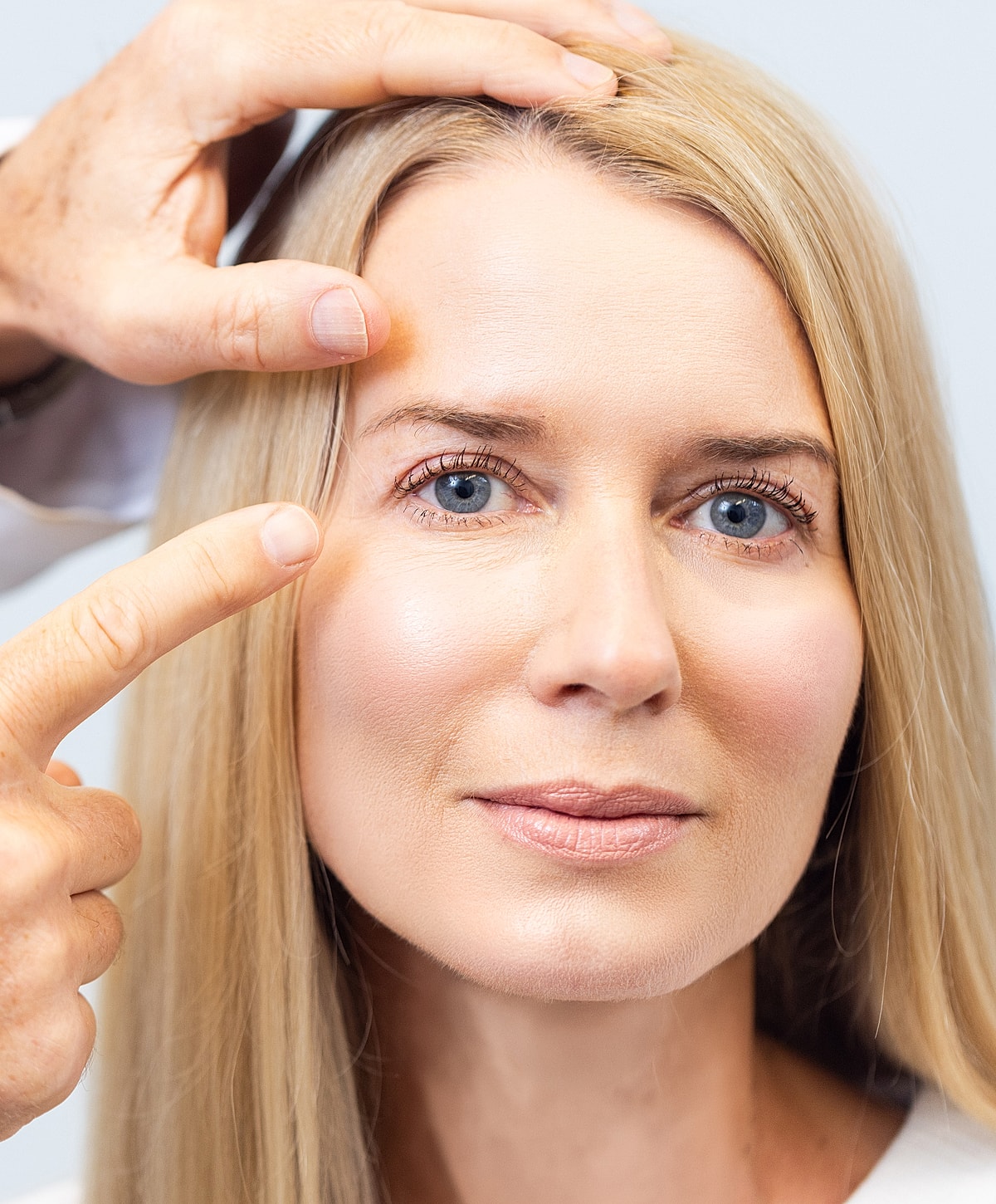
A More Vibrant Future
Because the skin around the eyes is thin and vascular, mild swelling, bruising, and tightness are normal parts of the early healing process. Most surgical patients experience minimal pain, which is easily managed with cooling compresses and mild medication.
Dr. Schlessinger provides ongoing support and clear aftercare guidelines, which may include wearing dark sunglasses outdoors, avoiding rubbing your eyes, and refraining from strenuous exercise or heavy lifting for two weeks after surgery.
Days 1–3: Bruising and swelling peak during the first 72 hours. Apply ice packs wrapped in clean cloths for 10 to 15 minutes at a time to keep swelling low.
Days 7–10: Suture removal takes place in our Woodbury office. Most swelling and bruising resolve during this window.
Weeks 2–3: Most patients feel completely comfortable returning to work, driving, and resuming light social activities and non-strenuous routines.
Following your procedure, you will notice immediate functional improvements, such as a wider visual field or resolved tear overflow. As initial swelling and bruising fade, your surgical results soften into smooth, natural contours that highlight your eyes.
Because Dr. Schlessinger focuses on long-term anatomical support, oculoplastic surgical outcomes are long-lasting. Upper eyelid surgery and ptosis repair often maintain their benefits for 10 to 15 years or more, while reconstructive repairs provide permanent structural stability.

Trust 30 Years of Oculoplastic Expertise
Operating on the delicate eyelids and surrounding eye structures requires specialized medical judgment. Dr. David A. Schlessinger is a board-certified physician, fellowship-trained in oculoplastic surgery through the American Academy of Cosmetic Surgery, and affiliated with the American Academy of Ophthalmology. He brings over 30 years of subspecialty excellence to every procedure.
Dr. Schlessinger and our dedicated team provide attentive support through every step of your preparation, surgery, and personal recovery.
An oculoplastic surgeon is a board-certified ophthalmologist who has completed intensive fellowship training devoted exclusively to plastic, reconstructive, and cosmetic surgery of the eyes and surrounding facial structures. This background provides complete expertise in protecting vision and eye health alongside facial aesthetics.
When procedures are performed to correct functional medical issues—such as heavy upper eyelid skin blocking vision, ptosis repair, blocked tear ducts, or skin cancer reconstruction—they may be covered by medical insurance. Purely cosmetic procedures designed to refresh appearance are self-pay. Dr. Schlessinger's team will help evaluate your benefits during your consultation.
Incisions are strategically placed within the natural folds of the upper eyelid crease, inside the lower lid (transconjunctival), or along the eyelash line. Once healed, scars fade into fine, faint lines that are virtually imperceptible.
Most oculoplastic procedures are comfortably performed on an outpatient basis using local anesthesia combined with gentle intravenous sedation ("twilight sleep"). This ensures you remain relaxed and pain-free while avoiding the side effects of general anesthesia.
Most patients take 7 to 10 days off from work and social engagements while initial bruising and swelling resolve. After suture removal on day 7, light mineral makeup can usually be applied to conceal any lingering pinkness.
“I couldn't be happier with the outcome.”